
Caring for community cats
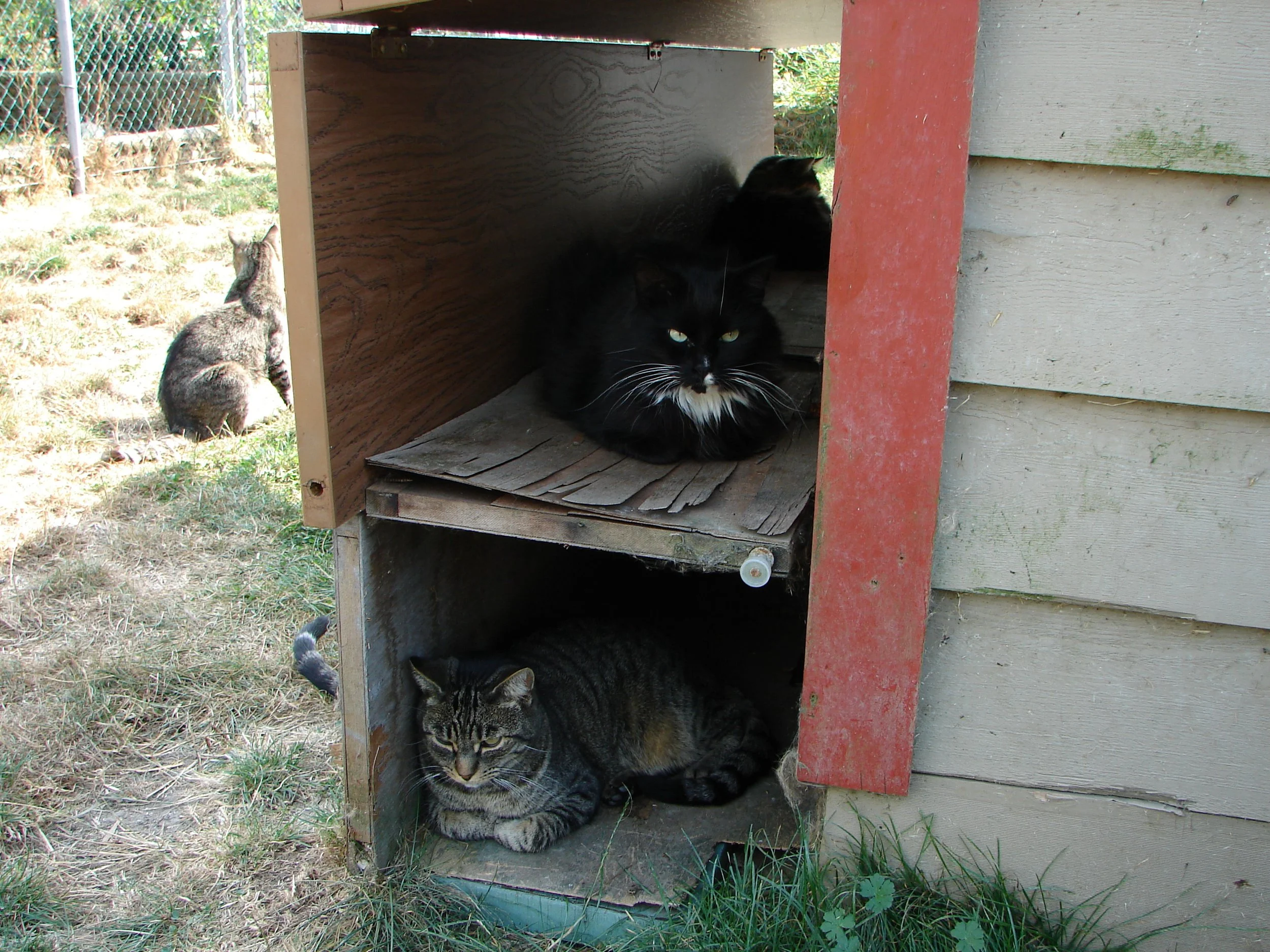
Trap-Neuter-Return (TNR) is the foundation of humane community cat management, but care doesn’t stop there. Creating a safe, consistent outdoor setup helps cats stay healthy while reducing their impact on the surrounding environment. Thoughtful management makes a big difference for the cats and for the community around them.
This guide outlines simple, practical steps to support community cats responsibly.
-
Choose one dedicated outdoor location and keep it organized. A single managed space helps keep the area clean, discourages cats from straying where they aren’t wanted, and protects surrounding wildlife.
Your setup should always include:
A feeding station separate from the sleeping or shelter area
Access to clean water at the feeding station
A sheltered space for resting and sleeping
Cats prefer to lounge and sleep away from where they eat. Whenever possible and space permitting, feeding and shelter areas should always be distinct from one another.
Nice to have additions to a dedicated outdoor space could include a large litter box (or boxes), sturdy weather proof cat trees, toys, cat safe plants, and objects for the cats to scratch and stretch on.
-
Feed once daily, in the same location, at a consistent time. Cats thrive on routine, and predictable feeding reduces roaming and hunting behavior.
Only feed during daylight hours and never leave food out overnight. Leftover food can attract wildlife such as raccoons, possums, and rodents, which may pose risks to cats. Fresh water can remain available day and night but should stay at the feeding station — not near shelters. To prevent ants, use ant-proof bowls or create a simple “moat” by placing the food bowl inside a larger container with about an inch of water.
You may also leave an open, unset trap near the feeding area so cats become comfortable with it. This can make trapping easier if medical care is needed. During extreme heat, mixing water into wet or dry food can help support hydration.
-
Outdoor shelters can be DIY or pre-built and should be weatherproof, insulated, and raised off the ground. A simple pallet works well to keep shelters dry.
A standard shelter should be about 2–3 feet wide and deep, and at least 18 inches high. The entrance should be small — about 6–8 inches — just large enough for a cat. Smaller openings help keep larger animals out.
In cold weather, insulate with straw only. Straw resists moisture and helps retain warmth. Do not use hay, blankets, or cloth bedding outdoors, as they trap moisture and can make shelters damp and cold.
-
Providing one consistent feeding and shelter area helps keep cats centered in a managed space. When cats know where and when they will be fed, they spend more time there instead of roaming through neighborhoods or natural habitats.
Reliable daily feeding also reduces the need to hunt for survival. While hunting is instinctive, well-fed cats are generally less motivated to seek prey, helping limit their impact on birds and small wildlife.